
Beyond Science: How OMB’s Proposed Rule on Federal Financial Assistance Threatens Essential Services Nationwide
Executive Summary
OMB’s proposed rule on federal financial assistance poses a sweeping threat to federal grantmaking and the responsible stewardship of American taxpayer dollars. It would dramatically expand executive authority to terminate, suspend, or redirect any discretionary federal grant at any time, for virtually any reason. This represents a deliberate weakening of Congress’s constitutional power of the purse and a dangerous disregard for the statutes Congress has passed to authorize critical services for Americans. While the scientific community has quickly responded with pushback, the implications of the proposed rule reach far beyond science and research.
The proposed rule, built directly on the Project 2025 blueprint, hands the administration sweeping authority over grants and cooperative agreements across all federal agencies. Although the rule nominally applies to discretionary awards, it instructs agencies to act “to the extent permitted by law” on formula, block, and other mandatory funding streams. Given the administration’s track record over the past year of using impoundment and aggressive terminations to cross traditional legal boundaries, this rule would dramatically lower the barriers to further politicizing and weaponizing federal grant funding for ideological purposes.
At the core of this proposed rule is the singular intent to control which populations get funded. Community organizations, non-profits, education institutions, and State, local, and Tribal entities are primary recipients of discretionary funding and often use a tapestry of government funds to provide services for communities across the country. By granting political appointees broad discretion to terminate or redirect funding based on ideologically driven criteria, the rule risks disproportionately harming marginalized communities and protected groups -- raising profound civil rights concerns.
The proposed rule governs the management of more than a trillion dollars in federal financial assistance across 41 government agencies. This impact report presents some of the most significant effects of this rule, including those beyond science and research, that Stand Up for Science has identified. This analysis is not exhaustive due to the rule’s breadth and complexity and therefore focuses on several of the most consequential areas that affect communities, research institutions, and scientific infrastructure across America. Our analysis draws on a detailed review of the proposed regulatory text and preamble, as well as trends and evidence from this administration’s actions over the past year in the sectors we highlight.
Table of Contents
Impact to Critical Nationwide Services
A. Impact on Department of Education grants
B. Impact on Substance Abuse and Mental Health Administration (SAMHSA) grants.
C. Impact on Veteran Services
Impacts to Clinical Trials
Impact on Credit Worthiness of Organizations Dependent on Federal Funding
The Bottom Line
Appendix A: Selected Current Open & Forecasted Grants Expected to Be Impacted by the Rule
I. Impact to Critical Nationwide Services
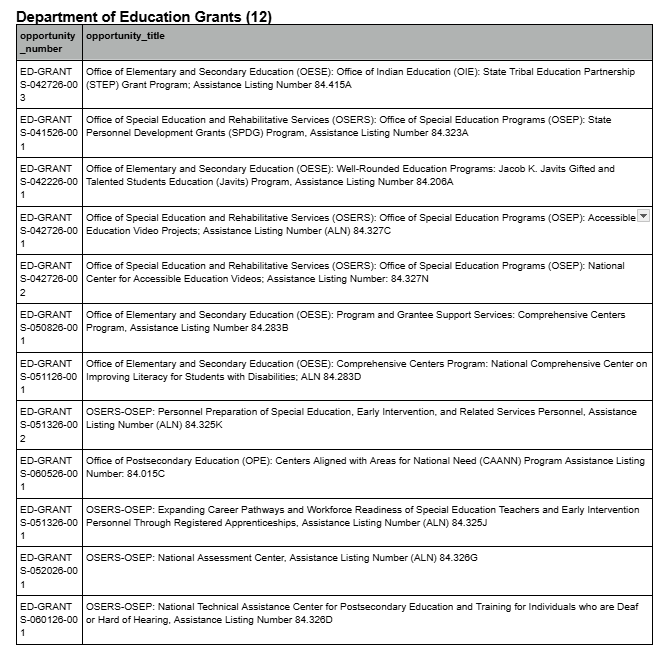
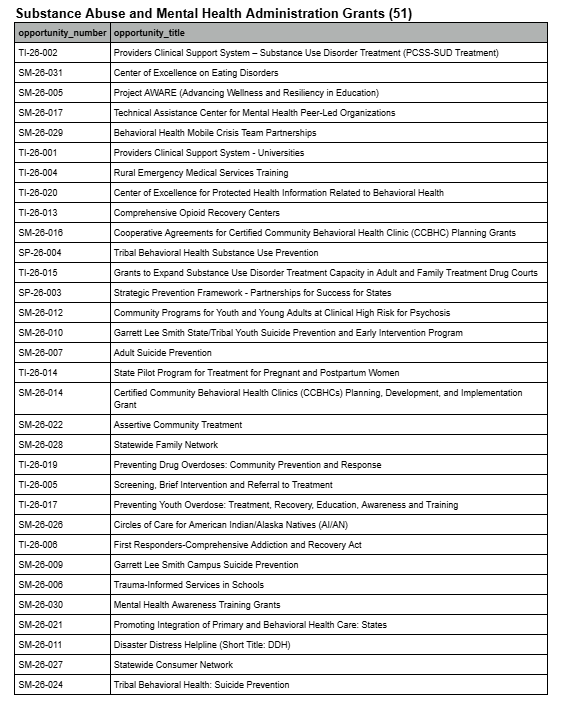
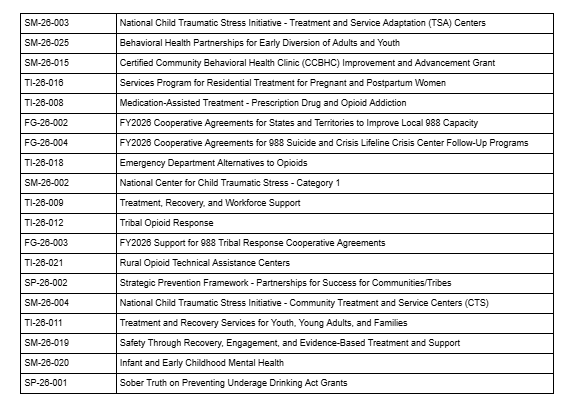
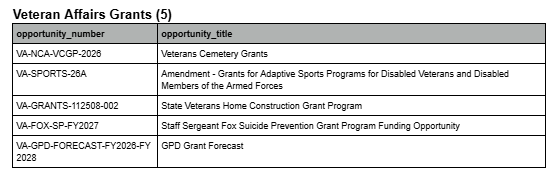
The proposed rule’s broad termination authority, political pre-issuance review, and arbitrary alignment with “presidential priorities” threaten essential services delivered by states, Tribes, schools, nonprofits, and community organizations in every congressional district. If left unchallenged, the rule will only widen the nationwide service gaps in education, public health, and veteran affairs that the Trump administration has already created over the past year. This section of the report focuses on affected essential programs across the Department of Education, Substance Abuse and Mental Health Administration, and Veteran Affairs, agencies that fund some of the most consequential and critical services in communities across America. See list of open ED, SAMHSA, and VA grants at the end of this document (Appendix A).
A. Impact on Department of Education grants
The proposed rule puts the entire discretionary grant portfolio of the Department of Education on the chopping block and disproportionately affects marginalized populations. Currently, all open announcements on grants.gov under the Department of Education (closing June/July 2026) would be subject to the proposed rule’s terms of termination, based on the administration’s actions in the past year and its arbitrary definition of “presidential priorities.” Among the most vulnerable are special education, disability-related, and Tribal grants, which have faced repeated targeting through grant cancellations, staffing cuts, gutting of the Office of Special Education Programs (OSEP), and proposed deep budget cuts[1].
Special Education and Disability Support grants are highly vulnerable.
Since Trump took office, his administration has taken aim at vital programs that serve disabled children, authorized through the Individuals with Disabilities Act (IDEA). Grant programs authorized under IDEA serve approximately 7.5 million disabled children across the country, or 15% of all public school students[2]. Multiple State Personnel Development Grants under IDEA Part D were terminated in 2025 (e.g., in Wisconsin, California, and Rhode Island). Grants provided under IDEA Part D constitute essential resources for disabled children and include support for personnel development, parent-training, and information centers[3] and were part of the broader cuts to IDEA in 2025[4]. State Personnel Development Grants are essential for training the specialized workforce, developing best practices, and building state capacity that enable millions of families to access high-quality special education and early intervention services. OMB’s proposed rule puts all open special education and disability grants currently on grants.gov at risk of targeted termination. These grants face heightened risk due to the administration’s stated intention to dismantle the Department of Education and consolidate oversight of IDEA programs under the Department of Health and Human Services (HHS)[5]. This shift would place key resources and authority for special education services that support infants, toddlers, and K-12 students with disabilities under the control of HHS Secretary and his political appointees.
Tribal-related grants are at high risk of being completely eliminated.
Tribal Nations and Native communities rely heavily on federal discretionary grants for education, housing, environmental protection, and other services. A May 2025 survey by the Native American Fish and Wildlife Society found that 60% of Tribes were experiencing funding freezes and over 25% facing outright grant cancellations. Brookings Institution estimated a total of $24 billion in appropriated funds to Native American communities were at stake, and of that, $518 million were funds from the Department of Education[6]. In May 2025, the administration canceled $18 million of grant competitions for the Native American Career and Technical Education Program because they did not align with administration objectives[7]. Given the precedence and what the proposed rule suggests, we anticipate most, if not all, Tribal-related grants to be subject to termination, including the State Tribal Education Partnership grant that is currently open on grants.gov.
Takeaway
The proposed rule supercharges the Trump administration’s aggressive strategy to dismantle the Department of Education. It attempts to override congressional intent by expanding executive authority in ways that would clear the path to reassign core programs to other agencies, such as shifting IDEA grants and oversight to HHS or Tribal education programs to Interior, while giving political appointees broad discretion to terminate or redirect funding based on vague or ideological criteria. If implemented, this rule will devastate access to essential educational services for millions of children, students with disabilities, and marginalized communities across the country.
B. Impact on Substance Abuse and Mental Health Administration (SAMHSA) grants
Many grants in mental health, crisis response, substance use, and suicide prevention were targeted for termination or frozen in 2025. In early 2026 the administration moved to abruptly cancel hundreds of SAMHSA grants, totaling nearly $2 billion, only to reinstate them 24 hours later after intense congressional and public pressure[8]. Despite these restorations, these actions have created significant uncertainty and unnecessary disruption, undermining ongoing congressional efforts to address rising rates of overdose deaths and suicide[9]. Combined with deep cuts to Medicaid, behavioral health care providers and experts nationwide are on high alert and have continued to monitor how SAMHSA administers discretionary grants. The proposed OMB rule would pave the way for the administration to move forward with terminations that it has attempted previously. The consequences of terminating these grants are extremely severe and could leave people experiencing addiction or mental health crises with no safety net.
Grants focused on Infants, Early Childhood Mental Health, Pregnant Women on the chopping block again.
According to a leaked draft of the administration’s 2026 budget proposal[10], the Trump administration proposed to completely eliminate 42 SAMHSA discretionary programs, including those listed below[11]. Of the 42 noted, 12-15 are currently open grants and at risk of termination. According to the leaked passback document, the following programs were among those proposed for elimination or major cuts as part of the restructuring and consolidation into the new Administration for a Healthy America. They are vulnerable because they fall outside the administration’s narrowed priorities of acute crisis response, opioids, and efficiency-driven consolidation.
Among the most vulnerable SAMHSA programs with current open grants:
Infant and Early Childhood Mental Health
National Child Traumatic Stress Initiative
Pregnant and Postpartum Women programs
Certified Community Behavioral Health Clinic grants (all variants: Planning, Development/Implementation, Improvement/Advancement)
Assertive Community Treatment
Center of Excellence on Eating Disorders (and other Behavioral Health Centers of Excellence)
Mental Health Awareness Training Grants
Strategic Prevention Framework (States + Communities/Tribes)
Tribal Behavioral Health grants (including Substance Use Prevention and Suicide Prevention)
Statewide Family Network + Statewide Consumer Network (Consumer and Family Network Grants)
Takeaway
OMB’s proposed rule is not a neutral technical update to federal financial administration, nor is it a benign effort to streamline or reduce administrative burdens — despite how the Trump administration may frame it. The human costs of politicizing access to essential services are severe. If Congress and key stakeholders fail to act, this rule will supercharge the administration’s attack on American families, stripping infants, children, pregnant women, Tribal communities, and other marginalized groups of critical mental health and substance use services. Support for our most vulnerable populations must never be sacrificed as collateral damage in the administration’s reckless ideological campaign against programs it labels “DEI.”
C. Impact on Veteran Services
While many core VA services for veterans are protected through direct appropriations, all discretionary grant opportunities, including those currently open on Grants.gov, would be subject to termination under OMB’s proposed rule. These discretionary grants primarily support veteran-related research, veteran-serving nonprofits, state/local/Tribal partnerships, caregiver programs, and community organizations, many of which layer VA funding with SAMHSA grants to deliver comprehensive care. This opens up a new and dangerous layer of politicization. Under the proposed OMB rule, political appointees can override expert review and determine which organizations “align” with administration priorities, putting grants at risk of being cut if they are deemed “woke” or not aligned. Community organizations serving veterans could see their funding disappear amid this arbitrary environment.
Grants to organizations that support veteran suicide prevention face uncertainty.
Community organizations frequently rely on both VA and SAMHSA funding streams to deliver comprehensive suicide prevention and mental health support for veterans in crisis. The Staff Sergeant Parker Gordon Fox Suicide Prevention Grant Program, with up to $112 million announced for FY2027, supports critical non-clinical services such as outreach, peer support, and warm hand-offs to care. While funding announcements for the Fox program continue, the broader instability from SAMHSA grant terminations, combined with the OMB rule’s expansive termination authority, introduces significant new risks for these organizations.
Veteran advocacy groups are sounding the alarm. Organizations like Iraq and Afghanistan Veterans of America and the Veterans Healthcare Policy Institute have highlighted how severe VA mental health staffing shortages – including the exodus of hundreds of psychologists, psychiatrists, and social workers documented in recent ProPublica reporting[12] – are fraying the safety net for veterans in crisis. This layered vulnerability threatens consistent, community-based support precisely when it is needed most.
Homelessness support grants are also highly vulnerable.
VA homeless support programs are primarily funded through discretionary grants such as Supportive Services for Veteran Families (SSVF) and The Grant and Per Diem (GPD) Program, which fund transitional housing, case management, and supportive services through community providers. GPD specifically has already faced funding uncertainty, reimbursement pressures, and program exits, with dozens of grantees leaving due to unsustainable costs post-pandemic. The Senate Veterans’ Affairs Committee’s recent report highlighted deliberate withholding and disruptions in homeless veteran services[13]. Community organizations often layer these VA grants with funding from HUD’s Continuum of Care (CoC) program -- another discretionary grant initiative. Recent Trump administration attempts to significantly restructure and defund key elements of the CoC program (i.e., shifting away from permanent supportive housing) were blocked by a federal injunction after a lawsuit from 20 states citing violations of the McKinney-Vento Homeless Assistance Act[14]. As with SSVF and GPD, the CoC program remains subject to the broad termination and politicization authority granted by the OMB’s proposed rule, which could allow political appointees to override statutory frameworks.
Takeaway
The combined effect of OMB’s proposed rule, SAMHSA and HUD grant instability, severe VA mental health staffing shortages, and repeated attempts to restructure veteran housing programs has created immense uncertainty for community-based veteran services. Even programs that appear protected today now operate under a political shadow in which “alignment with administration priorities” can override demonstrated need and statutory intent. This puts suicide prevention, transitional housing, peer support, and comprehensive care for veterans at grave risk, turning essential safety-net services into political targets and constituting a profound betrayal of those who served our country.
II. Impacts to Clinical Trials
Clinical trials serve as a critical bridge between laboratory discoveries and real-world medical care, directly benefiting patients with cancer, diabetes, heart disease, rare disorders, mental health conditions, and many other diseases. Millions of Americans, including veterans, children, and underserved communities, rely on these trials for access to cutting-edge therapies and improved standard of care. Federally funded clinical trials, primarily supported by the National Institutes of Health and other federal agencies, form the backbone of early-phase and high-impact research in the United States. These trials have been extraordinarily productive: between 2010 and 2019, more than 90% of all new drugs approved by the FDA originated from clinical trials that received some form of federal funding or support[15].
Stand Up for Science analyzed over 10,000 currently active clinical research studies funded by the federal government, sourced from clinicaltrials.gov, a government database managed by the National Institute of Health. If the OMB rule is implemented, Stand Up for Science conservatively estimates that nearly 50% of these trials would be ineligible to receive funding, simply due to international collaborators or political censorship. The Trump administration has a history of canceling work involving terms in its “banned words list.” SUFS compiled all active clinical trials with instances of these banned words within study descriptions and all trials with international involvement.
The consequences are staggering: almost 5,000 active trials would be subject to OMB’s rule, including over 1,000 cancer-related trials, hundreds of pediatric studies, and hundreds of trials each studying veterans, suicide, heart disease, and diabetes. While the administration promotes initiatives like “Operation Trailblazer”[16] under HHS Secretary RFK Jr. in the name of efficiency and speeding up innovation, the OMB rule would simultaneously enable a dangerous combination of politicized termination authority and the potential to bypass rigorous safety and ethical reviews. Political appointees could override expert panels, redirect funding toward ideologically favored areas, and pressure researchers to alter study designs or language to maintain compliance.
All future clinical trials would be at risk of cancellation under the proposal, as the rule would put political appointees in charge of funding decisions and give them the ability to cancel funding at any time.
Takeaway
Federally funded research is an integral part of our scientific infrastructure and closely intertwined with our daily lives, providing jobs, supporting local economies, and giving us medical innovations and advancements like gene therapy and immunotherapy treatments for cancer, new drugs to treat rare diseases, and significant advances in HIV treatment. The proposed rule enables political appointees to ignore expert advice or scientific consensus, direct funding to preferred applicants, or cancel funding at any time for any reason, including midway through a clinical trial period. This proposal introduces new levels of arbitrary decision making, uncertainty, and risk for those applying for federal funding for their clinical trials, and puts the health and well being of millions of clinical trial participants at risk.
III. Impact on Credit Worthiness of Organizations Dependent on Federal Funding
Moody’s Ratings[17] has stated that the rule would “significantly increase the risk profile of federal discretionary grant revenue”, especially “where discretionary federal awards intersect with municipal debt structures.” This is due to additional uncertainty caused from political decisionmaking at the pre-award and post-award stage. The government having such broad authority to fund, cancel, or demand a program be modified to suit their ideology creates significant instability, both for organizations trying to plan budgets and for the reliability of U.S. financial commitments as a whole.
The credit risk would not only impact universities that rely on research funding, but any organization that relies on multi-year funding programs operated by the government, including “smaller municipalities that depend on Housing and Urban Development (HUD) community development or Federal Emergency Management Agency (FEMA) hazard mitigation grants.”
While block grants, statutory formula programs, and disaster recovery grants are not subject to early termination (like Medicaid, Title I education funding, and highway apportionments), the rule would still be significantly impactful on the credit worthiness of these programs due to increased administrative burden from the rule’s other prohibitions and slower disbursement of funds.
Moody’s concludes by noting that the notice-and-comment rulemaking would make the rule significantly more durable, even into future presidencies, as a future administration could not withdraw it without going through an equivalent rulemaking process that would itself be subject to Administrative Procedure Act challenges.
Takeaway
This proposal will make the U.S. a more unpredictable and riskier source of funding, and as a result, may affect recipient’s credit ratings, making it more difficult for entities like small towns, hospitals, schools, and others to borrow money.
The Bottom Line
Federal discretionary spending, which supports the vast majority of grants to states, nonprofits, communities, research institutions, and essential services, totaled approximately $1.87 trillion in FY2025[18]. Of this, nondefense discretionary programs (the primary source of funding for the community services, education, mental health, veteran support, and research programs discussed in this report) accounted for roughly $783 billion[19]. These grants are powerful economic engines that drive the American economy. NIH research funding alone supports over 400,000 jobs nationwide, and broader studies show that government grant spending generates between 8 and 40 jobs per $1 million invested locally, with education, healthcare, and prevention programs producing some of the strongest economic returns. In short, discretionary grants sustain hundreds of thousands of jobs in nonprofits, schools, clinics, and research institutions, while driving local economic activity across every congressional district.
OMB’s proposed rule on federal financial assistance poses profound human and economic costs. It will dramatically widen the nationwide service gaps in education, public and behavioral health, and veteran services that the Trump administration has already created over the past year.This is democracy being dismantled one administrative policy at a time.
This is a central piece of a broader strategy to dismantle key functions of government and dramatically shift power to the executive branch. 2 CFR 200 is not an obscure bureaucratic policy, it is the core regulation that governs how more than a trillion dollars in American taxpayer dollars are awarded, managed, spent, and accounted for every year. We must contextualize this overhaul of federal financial assistance within the current political reality: a captured presidency and a judiciary increasingly deferential to executive power. By rewriting these rules, the proposal severely undermines congressional intent, weakens statutory protections, and hands unelected political appointees sweeping authority to terminate or redirect funding based on ideological alignment rather than merit, need, or evidence.
Stand Up for Science has called on the scientific community and all Americans who value democracy to reject this rule in its entirety. As of this writing, the proposed rule has already received more than 68,000 public comments, a clear signal of widespread public opposition.
We are sounding the alarm on what lies ahead: a future in which essential services for veterans in crisis, children with disabilities, families struggling with mental health and addiction, Tribal nations, and other marginalized communities are treated as disposable political bargaining chips rather than public goods protected by law. Congress must act now to reclaim its constitutional power of the purse and ensure that the Office of Management and Budget operates within its statutory authority before this dangerous vision becomes reality.
Footnotes
[1] Center on Budget and Policy Priorities, “Trump Administration Threatens Support for Children With Disabilities,” October 21, 2025, https://www.cbpp.org/blog/trump-administration-threatens-support-for-children-with-disabilities.
[2] National Center for Education Statistics, “Students with Disabilities,” *The Condition of Education* (U.S. Department of Education, Institute of Education Sciences, last updated May 2024), https://nces.ed.gov/programs/coe/indicator/cgg/students-with-disabilities.
[3] U.S. Department of Education, “Statute and Regulations,” Individuals with Disabilities Education Act (IDEA), accessed June 29, 2026, https://sites.ed.gov/idea/statuteregulations/.
[4] Michelle Diament, “Trump Administration Yanks Funds From Dozens of Special Education Programs,” Disability Scoop, September 11, 2025, https://www.disabilityscoop.com/2025/09/11/trump-administration-yanks-funds-from-dozens-of-special-education-programs/31622/.
[5] Linda Jacobson, “Trump Says Special Education Oversight Will Move to HHS,” K-12 Dive, March 21, 2025, https://www.k12dive.com/news/trump-mcmahon-special-education-move-to-hhs/743260/.
[6] Glencora Haskins, “A Federal Grant Freeze Could Disrupt Over $24 Billion to Native American Communities and Undermine US Obligations to Tribes,” Brookings Institution, July 14, 2025, https://www.brookings.edu/articles/a-federal-grant-freeze-could-disrupt-over-24-billion-to-native-american-communities-and-undermine-us-obligations-to-tribes/.
[7] Susan D’Agostino, “Education Department Retracts CTE Grants for Native American and Hawaiian Students,” Higher Ed Dive, May 15, 2025, https://www.highereddive.com/news/education-dept-retracts-fy25-grants-native-american-hawaiian-student-cte/748189/.
[8] Blaire Bryant and Naomi Freel, “SAMHSA Cancels, Reinstates Thousands of Behavioral Health Grants,” National Association of Counties, January 15, 2026, https://www.naco.org/news/samhsa-cancels-reinstates-thousands-behavioral-health-grants.
[9] Giuliana Grossi, “Trump Terminates Hundreds of SAMHSA Grants, Threatening Mental Health, Addiction Services Nationwide,” AJMC, January 14, 2026, https://www.ajmc.com/view/trump-terminates-hundreds-of-samhsa-grants-threatening-mental-health-addiction-services-nationwide.
[10] “New: A 64-Page HHS Restructuring Proposal,” Inside Medicine, https://insidemedicine.substack.com/p/new-a-64-page-hhs-restructuring-proposal.
[11] “New: A 64-Page HHS Restructuring Proposal.”
[12] Vernal Coleman, Topher Sanders, Joel Jacobs, and Eric Umansky, “Veterans Affairs Mental Health Therapists Quit Amid Trump,” ProPublica, March 26, 2026, https://www.propublica.org/article/veterans-affairs-mental-health-therapists-quit-trump.
[13] U.S. Senate Committee on Veterans’ Affairs, Democratic Staff, Breaking the Pact: Impacts of Trump, DOGE, and Collins’ Ongoing Assault on Veterans, January 2026, https://www.veterans.senate.gov/services/files/A08A4C86-DB56-4A01-B98F-6ED1CF3F2B7A.
[14] Roshan Abraham, “Judge Blocks HUD Overhaul of Federal Funding for Homelessness Services,” Shelterforce, January 23, 2026, https://shelterforce.org/2026/01/23/judge-blocks-hud-overhaul-federal-funding-for-homelessness-services/.
[15] Ekaterina Galkina Cleary et al., “Contribution of NIH Funding to New Drug Approvals 2010–2019,” Proceedings of the National Academy of Sciences 119, no. 16 (2022): e2113067119.
[16] U.S. Department of Health and Human Services, Operation Trailblazer, 2026, https://www.hhs.gov/sites/default/files/operation-trialblazer.pdf.
[17] Moody’s Ratings, “US Proposed Rewrite of Federal Grant Rules Would Introduce Significant Uncertainty for Nonprofits and Governments,” Sector Comment, https://www.moodys.com/research/Public-Finance-US-Proposed-rewrite-of-federal-grant-rules-would-Sector-Comment--PBC_1487271.
[18] Peter G. Peterson Foundation, “Chart Pack: The US Budget,”, https://www.pgpf.org/article/chart-pack-the-us-budget/.
[19] Center on Budget and Policy Priorities, “Non-Defense Discretionary Programs,” https://www.cbpp.org/research/federal-budget/non-defense-discretionary-programs.
Appendix A: Selected Current Open & Forecasted Grants (from Grants.gov) Expected to Be Impacted by the Rule as of 6/12/2026
About Stand Up for Science Foundation
Stand Up for Science as a grassroots advocacy organization emerged at the height of the Trump administration’s attack on science in 2025. During a period when federal science agencies faced targeted grant terminations, workforce eliminations, and the installation of ideologically driven leadership, Stand Up for Science rose as a clear voice defending scientific integrity for the scientific community. In just one year, Stand Up for Science has turned a national protest into a national movement, rallying thousands of scientists and supporters across the country, launched chapters in multiple states, and mobilized citizens to defend science and democracy in the public square.
Today, the Stand Up for Science Foundation serves as an extension of this science-activist grassroots movement and carries the momentum forward. We are a team of scientists, policy experts, and volunteers united by the motivation to translate grassroots energy into strategic action. Our team works directly with champions of science in Congress, building coalitions across the scientific community, and advancing policies that protect scientific integrity and ensure science serves the public good.