
Investigation Report: CDC-Funded Hepatitis B Vaccine Trial in Guinea-Bissau
Date: 2 March 2026
Prepared by: Stand Up for Science
Scope: On-the-ground fact-finding in Guinea-Bissau regarding a planned Hepatitis B birth-dose vaccine trial funded by the U.S. Centers for Disease Control and Prevention (CDC), and the local oversight conditions under which it was awarded.
1) Why Stand Up for Science investigated
Stand Up for Science (SUFS), a grassroots 501(c)(3)/(c)(4) organization dedicated to defending scientific integrity and public health institutions in the United States, launched this investigation after press reports that HHS, via the CDC, awarded a grant for Hepatitis B (HepB) vaccine birth dose trial in Guinea-Bissau to Bandim, a Danish international non-governmental organization (INGO) operating in Guinea-Bissau. Given the high stakes for U.S. public health and research policy and the profound vulnerability of research subjects in Guinea-Bissau, SUFS dispatched an experienced associate with decades of West Africa investigative journalism expertise to conduct an on-the-ground fact-finding investigation. What follows are her findings, based on interviews with local researchers, former senior health officials of the Government of Guinea-Bissau, and other key stakeholders; review of relevant documentation; and direct observation of the country’s governance and oversight capacity and the institutions involved.
2) Summary of ethical concerns with the Hep B study protocol
Independent expert analysis of the revised January 2026 protocol for the CDC-funded HepB birth dose trial has concluded that major ethical issues remain unresolved. In particular, critics argue that the protocol continues to justify withholding a proven intervention on the grounds that HepB birth dose is not yet the universal standard of care in Guinea-Bissau, even though the study would not meet the ethical requirements of a U.S. Institutional Review Board (IRB). Expert reviewers also argue the protocol fails to address foreseeable harms to infants born to HepB–infected mothers and does not reflect adequate protections that would be required in the United States or Europe. (Jeremy Faust, MD, “Update: A newly revised protocol of the CDC-funded Hepatitis B vaccine trial in Guinea-Bissau. ‘This is still bad.’” Inside Medicine, Jan 16, 2026)
Principal key reasons experts consider the planned trial unethical
Foreseeable harm to infants: the protocol may expose newborns of HepB-infected mothers to avoidable risk if screening is incomplete and the birth dose is withheld from some infants. (Faust 2026)
Lack of genuine equipoise: there is no legitimate scientific uncertainty about the benefit of HepB birth dose for preventing vertical transmission, undermining the ethical basis for randomization that withholds the intervention. (Faust 2026)
Inadequate safeguards: the protocol reportedly does not implement low-cost, ethically straightforward steps (such as universal maternal screening and excluding HepB-positive mothers) that could reduce foreseeable harm. (Faust 2026)
Insufficient or unclear institutional oversight: required approvals by the sponsor’s or U.S.-based IRBs are absent or unclear, despite U.S. taxpayer funding. (Faust 2026)
Risk of “results shopping”: The trial’s framing and outcome selection has been criticized as potentially oriented toward detecting harms or supporting fringe narratives rather than advancing meaningful public health benefit for Guinea-Bissau. (Faust 2026)
3) Country context: a fragile oversight environment
Our on-the-ground investigation found that Guinea-Bissau’s institutional instability and severe resource constraints raise significant concerns about whether any complex clinical trial can be ethically overseen without extraordinary safeguards.
Political instability: Guinea-Bissau has experienced roughly nine attempted, failed, or successful coups in its 50 years of independence. In late November, the military took over on the day election results were due to be announced.
Undercapacity of core institutions: National institutional infrastructure, including government oversight mechanisms meant to protect citizens, are woefully under-resourced and dysfunctional.
Judicial fragility: Guinea-Bissau’s judicial system is extremely weak and under-capacitated. For example, in one prior case, alleged traffickers were released because the court did not have enough judges to conduct the trial.
Geopolitical vacuum: China has built major roads, Russia has invested in mining infrastructure, and Turkey has built a new airport. Meanwhile, the U.S. has not had an Embassy in Guinea-Bissau since 1998, it cut off the small amount of aid it provided prior to 2025, and the U.S. public image has become tied locally to a “controversial vaccine trial” seen as taking advantage of a vulnerable population without functioning safeguards.
4) Findings: oversight bodies and conflicts of interest
A. Ethics committee capacity constraints
Interviews and documentation indicate the national ethics committee is operating with minimal resources and infrastructure, severely limiting its oversight capacity:
The committee historically required multiple paper copies of protocols (six for members plus one for archive), but now requests electronic versions.
Committee representatives stated, “We don’t have a budget to function… we are all volunteers.”
The committee has “not been able to put all the protocols online.”
B. Potentially compromised independence and “committee capture”
Multiple sources described conflicts of interest and compromised independence of the national ethics committee:
A sociologist described the ethics committee as “a mafia” and alleged members are paid “one way or another by Bandim.”
A former deputy minister of health described it as “a fan club… a friend’s club.”
A researcher involved in a prior legal challenge stated that people “inside the committee” were also employed by Bandim and that ethics sign-off occurred despite conflicts of interest.
C. Ethics committee member’s stated conflict and refusal to discuss Bandim
An interviewee described as associated with the ethics committee and INASA (National Institute of Public Health) stated:“I don’t want to talk about Bandim, because I’m on the ethics committee… and I am the INASA director of communication and Bandim is also in INASA.”
5) Findings: Bandim and Institutional Dependency
Our investigation repeatedly encountered a central structural problem: Guinea-Bissau’s health infrastructure appears deeply dependent on Bandim, complicating the independence of oversight.
A Guinean researcher reported that the state should “appropriate the research more and appropriate the results,” and noted the government is “too dependent” on Bandim.
The same source described practical dependency, including reliance on Bandim-linked processes for civil registration and vital statistics, and that “all the evidence in intervention projects… malaria, TB… all of it comes from Bandim.”
INASA sources asserted that Bandim “is the government,” and INASA refused to provide document access.
Multiple sources stated or implied that Bandim created INASA, the institution that is expected to provide national public health oversight.
This entanglement creates a high-risk environment for conflicts of interest and weak accountability when Bandim-affiliated actors are involved in reviewing or approving Bandim-run trials.
6) Findings: consent, transparency, and past legal action
A. Consent and standards compliance concerns
A person involved in prior legal action stated they believed the research was not following international standards for executing a trial, including concerns about whether consent procedures ensured true understanding of risks. The creole word for HepB is febri amarelu which translates to “yellow fever” and is indistinguishable from the disease, yellow fever.
B. Lack of public protocol information
The same source noted the absence of publicly available information about the protocol, which they regarded as required.
C. 2020 legal challenge and judicial stop
A researcher described initiating legal action in 2020 to stop Bandim-associated clinical trials, stating they obtained a judge’s order to stop the process.
7) Public health capacity and safety monitoring gaps
Interviews with former senior health officials highlighted severe constraints that would affect any trial’s safety monitoring and accountability:
A former deputy minister of health stated the national health budget is less than half a million dollars.
The same official stated there is one coroner in the country, currently out of Guinea-Bissau due to health conditions that cannot be treated locally, meaning “no one can determine a cause of death.”
The official stated Guinea-Bissau had four health ministers in the past year, underscoring institutional volatility.
The former deputy minister described a profound inability to protect citizens from external vulnerabilities: “Very, very weak… because they don’t have any money,” and answered “No” when asked whether the government was capable of protecting people from unethical clinical trials.
A former minister of health described the health budget as only enough to cover salaries of functionaries, not hospitals, medical schools, or the national laboratory.
8) Why it matters: ethics and U.S. responsibility
The trial’s ethical controversies cannot be separated from its setting. Our investigation revealed that Guinea-Bissau’s oversight bodies operate without stable resources, transparency mechanisms are seemingly non-existent, and conflicts of interest are widely alleged by local experts and former officials. In that context, a CDC-funded clinical trial that withholds a proven intervention, or is perceived as aimed at validating fringe theories –that the HepB birth dose is not beneficial –constitutes an unacceptable risk of harm to vulnerable children, funded by U.S. taxpayers.
It is unethical and unacceptable to direct funds toward studying a proven, life-saving intervention against a placebo. A Guinean researcher expressed distress that children would not receive the vaccine they needed and asked why not simply provide vaccination to as many children as possible. With support from the GAVI Vaccine Alliance, the Government of Bissau is planning the full rollout of HepB birth dose vaccines in 2027. At a cost of $0.20 USD per dose, there is no public health rationale for running a trial instead of investing in direct vaccine access.
9) Conclusion
Based on Stand Up for Science’s on-the-ground investigation and experts’ assessments of the trial protocol, we conclude that the planned CDC-funded HepB birth dose vaccine trial in Guinea-Bissau raises grave ethical concerns, which are magnified by Guinea-Bissau’s limited capacity for independent oversight, and by credible, repeated allegations of institutional conflicts of interest among the very bodies responsible for protecting research subjects.
But the story does not end with process shortcomings or missing safeguards. The planned trial reflects a broader, deeply disturbing pattern under RFK Jr’s leadership of HHS: deliberately directing public resources to “results shop,” validate fringe narratives, and pursue ideologically motivated experimentation at the expense of vulnerable human beings. Conducting a U.S.-taxpayer-funded trial in a country where oversight is all but lacking and government capacity is extremely limited, while withholding a proven, life-saving intervention from some infants, is not just questionable science. It’s neocolonial medical exploitation: treating vulnerable communities as convenient testing grounds for political projects that would face far greater resistance and scrutiny at home.
RFK Jr.’s apparent readiness to tolerate foreseeable harm to infants in Guinea-Bissau is a warning. If HHS leadership is willing to accept these risks abroad, where accountability is weaker and the people harmed have less power to push back, it signals how far this administration may be willing to go to erode ethical standards, scientific independence, and public protections in the United States. What is being tested in Guinea-Bissau is whether the United States will uphold the basic principle that public health policy must be grounded in evidence and ethics, and that no population, anywhere, should be sacrificed to advance fringe ideology.
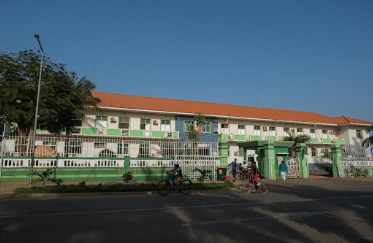
Photo: Hospital Nacional Simao Mendes (National Hospital) in Bissau. ©RC